The UmArts team travelled to the Konstfesten Art Festival at the Kin Museum of Contemporary Art in Kiruna, 19-21 February 2026. This study trip enabled a deep engagement with the cultural and environmental politics of an extraordinary mining town in Sápmi, high above the Arctic Circle. This post includes reflections and images from the group.
First impressions upon arrival
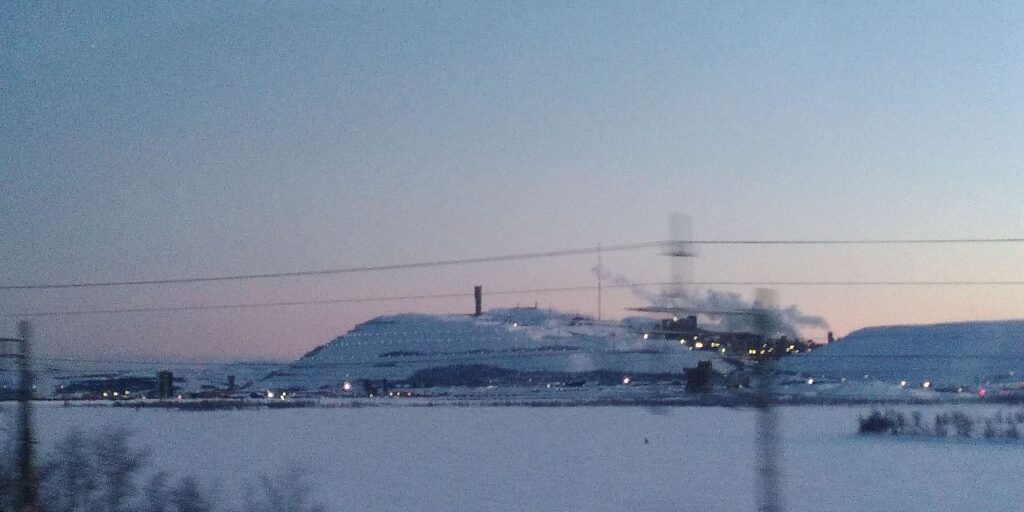
“After eight hours, the train traces the line of the mine, the stepped mountainsides interrupted by rundown cascades where gravity pulls the staggered cuts down to the level of the town. The tracks carry iron-ore onwards to the port in Narvik, Norway in a constant flow. The mine operates 24/7, a sleepless relentless extraction, at odds with the extremes of the winter darkness and long summer days. And at odds with the Swedish life-work balance. There is no rest of the earth as it is disembowelled, the insides of the red ore body flow up, out and over the decapitated mountain. The modernist head of the mineshaft looms on the top of the mountain, a concrete sculpture competing with the concept of Picasso’s proposal for a public monument in the town. The price of art and the costs of mining in a balancing act which pits cultural gentrification as an art-wash of critical engagement with the sedimented practices of extraction.
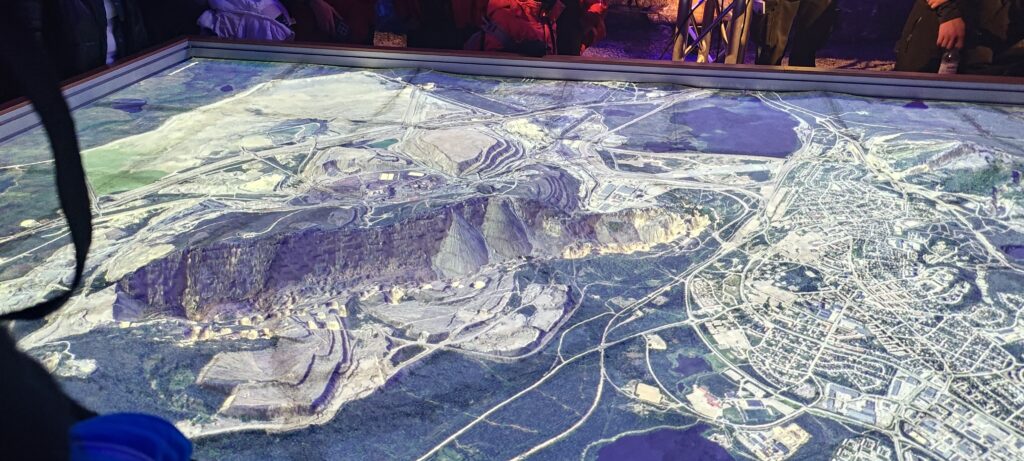
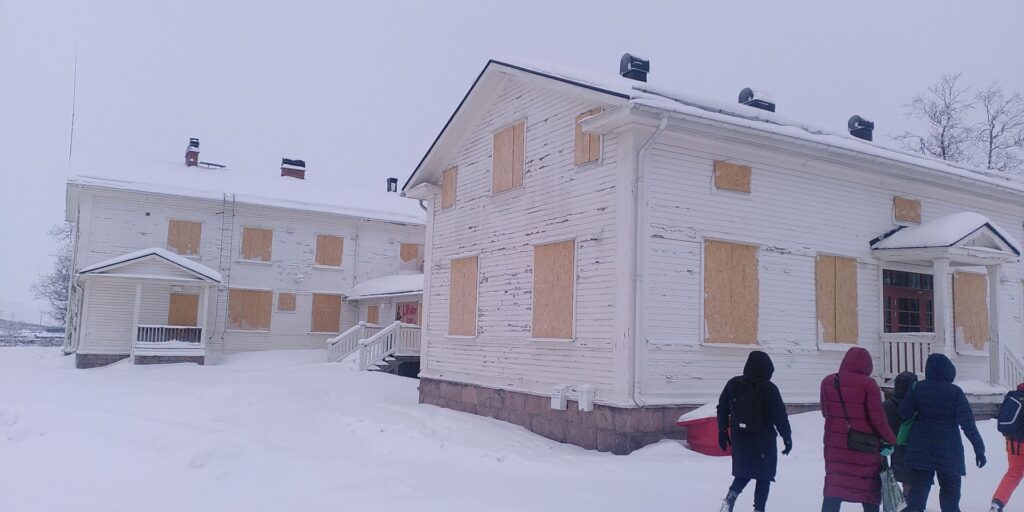
‘Gamla stan’ usually refers to an ‘old town’ conservation area, but in Kiruna the old town is sinking into the expanding mine, and a new town is taking shape. Many buildings are due for demolition whilst others are being moved from the old to the new site. In new town is centred around Kristallen (the Crystal) city hall by Henning Larsen Architects, the same practice that designed Bildmuseet and Umeå School of Architecture on the Arts Campus of Umeå University.
The Kristallen includes the KIN museum of contemporary art entangled with the architecture of local government. Like Umeå school of Architecture, the building offers views between floors and out to the exterior as you move between a sequence of specialist rooms, walkways and viewing platforms. It’s hard to tell if this is an art museum which contains the civic functions of Kiruna Kommun or a local government building which includes spaces for art on the higher floors. This balancing act is a perfect stage for Curator and Director Maria Lind’s vision of the museum as a dialogue driven space for art that connects local, Arctic and sámi perspectives with global issues. The Konstfesten was a very informative precursor to planning events for the Arctic Arts Summit that will be hosted by Umeå in June 2026.”
⏤ Ele Carpenter
A rich program to take in
“We arrived already out of breath from our late train and were thrown right into the talks, not an easy feat as the program for the Kin Festival was ambitious and dense, stretching itself to spread across time and across space in an impressive attempt to capture the multiplicity of the power dynamics that call Kiruna home.
The historical roles of intellectuals and the institutions in the colonisations process of the North, through photographs, narratives of assimilation, invisibilisation and extraction of Sámi and Meänkieli culture, and of the natural resources were present in most of the talks. Reflections on how losing a language is not only to be invisible publicly but also to each other and to ourselves echoes as we’re asked in another talk to look back to a previously overlooked album in the archives and what we can still learn from it by looking at it anew, where the (Borg Mesch) studio ‘was the extended network of the photographer, mostly women, without whom there wouldn’t be images’, images that had a role in shaping perceptions of the North. Another talk positioned us at the crossroads where institutions are dealing with their colonial history with ‘responsibility and transparency as the main drive instead of guilt’, where Sámi people develop the narrative ‘to invite people in, after having been studied from the outside’ which found its echo when we’re asked to revisit the work and life of Johan Turi at another. We were also looking at the most recent Night festival in Korpilombolo, the upcoming Råneå biennale, its konsthall and the very alive contemporary art scene in Norrbotten where unexpected encounters happen in/from/through narratives and their different locations of publicness. Narratives and forms of publicness are also revisited in the form of the ‘What if’ or unrealised situation of the almost-Picasso statue.
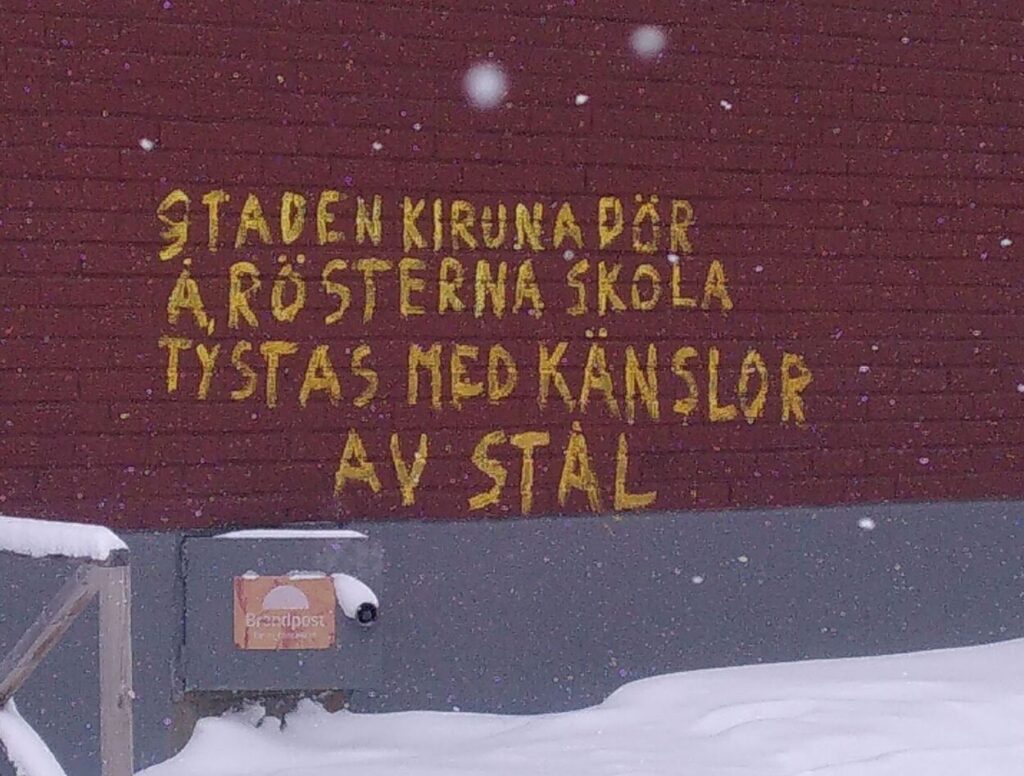
The talk about the relationship between the presence of natural resources and their roles in political systems and internal colonialism within the Russian empire echoed true into the halls of this newly erected building. After all, the mine and its toxic codependent relationship with Kiruna was present as a haunting red thread through out the talks. The panel discussion on the mine, happening fittingly inside Dora Garcia’s exhibition looking at the mine’s historical Picasso exhibition and its mediation work as well as the mine’s current landscape reality, grounded and opened the discussion beyond art to the realities faced in everyday life and the actionable tools that still exist to resist the continuous extraction. Realities that became all the more graspable as we were being guided through the old Kiruna by long-time residents of the newly extended zone of old Kiruna that needs to be evacuated
The interesting but dense program was thankfully punctuated by (fika) pauses, and one could have – maybe greedily – wanted more (or longer) breaks in order to pursue those meaningful conversations that happen as one queues for a much needed coffee, breaking down the barrier between presenters and attendees, at the risk of the festival lasting a little longer.
What transpires through the guests, the lectures and the dinner conversations that did happen though is a love, resilience and care for a town and a region in all of their complexities and that wasn’t lost on us.”
⏤ Lou Patrouix
Love and Trade – a situated meal at the Samegården
“On Friday evening (February 21st), we went to Kiruna Samegården, a safe haven started by the Sámi communities to provide accommodation for their members. Firstly, we all gathered together for an introduction to the evening. Then, we voluntarily split into two groups, and mine went to the basement to listen to a talk by Siv Labba, a member of the Kiruna Sámi Association, which runs the museum. They shared their perspective about the Sámi history, especially through the objects they brought to show us. I am very interested in how different cultures develop their unique craftsmanship, so I was amazed by the objects and techniques the Sámi people created with the limited resources and challenging weather conditions, such as tough tendon threads from Reindeer muscles.
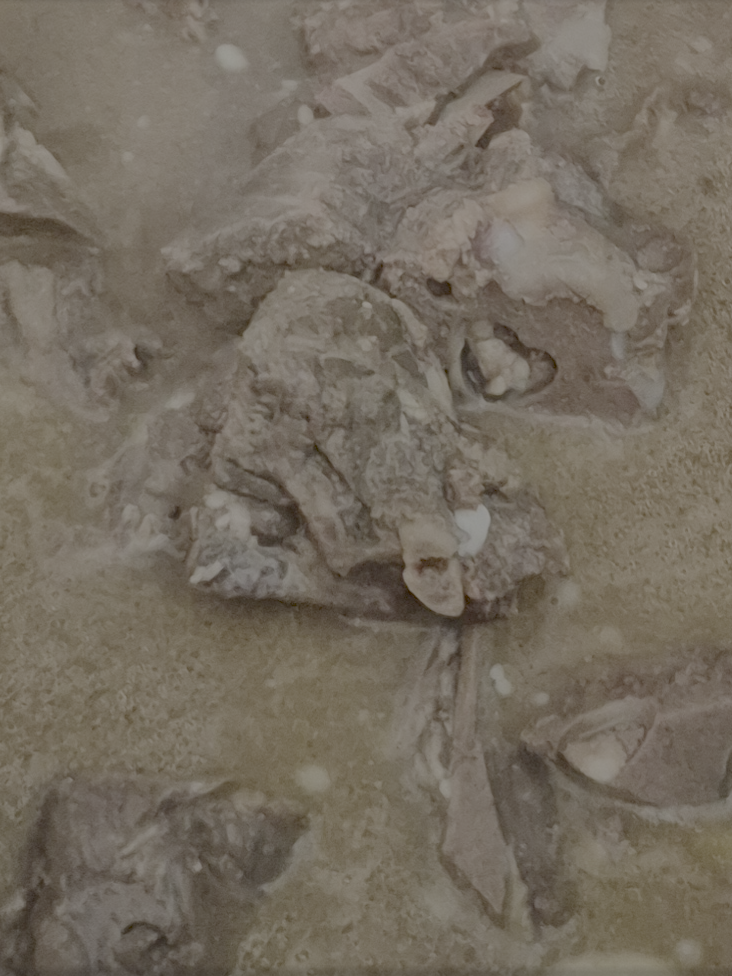
After that, we went upstairs to the large space for events on the ground floor, which also has a large communal kitchen. The food was prepared by Den goda maten, a collective of artists and researchers within Kin’s multi-year project on art, food and environment that have developed this meal in response to food traditions and other forms of exchange in the region, hence the title Love and Trade. We gathered around baking gáhkku (bread), and sharing stories of the dishes we brought to the buffet from our homelands. It was my first time trying reindeer meat in various shapes and forms, such as in the biđus soup, as sausage, and dried and smoked pieces.
We were only there for a few hours, of course, but it nonetheless one of the most culturally rich learning experience I have had.”
⏤ Renan de Menezes Anan
Participating in ‘The Benevolent food’ inquiry.
“During Konstfesten 2026, The Benevolent Food invited participants to a Love & Trade community celebration. Community referring not identity and belonging, but rather individuals making themselves useful for a common duty understood as a gift and mutual aid in relationship with others. In the rural environments and traditions where our practices are situated, community work celebrations are practiced under different names such as minga (Quechua minka for coming together) in the Andean region, lumbung (Granary) in Indonesia, Moba in the Balkans, and Sita among Sámi reindeer herders. These have in common that they are all ways of caring for the common good and the land through mutual aid, resource sharing, and collective governance with hosting and food practices always in the centre.
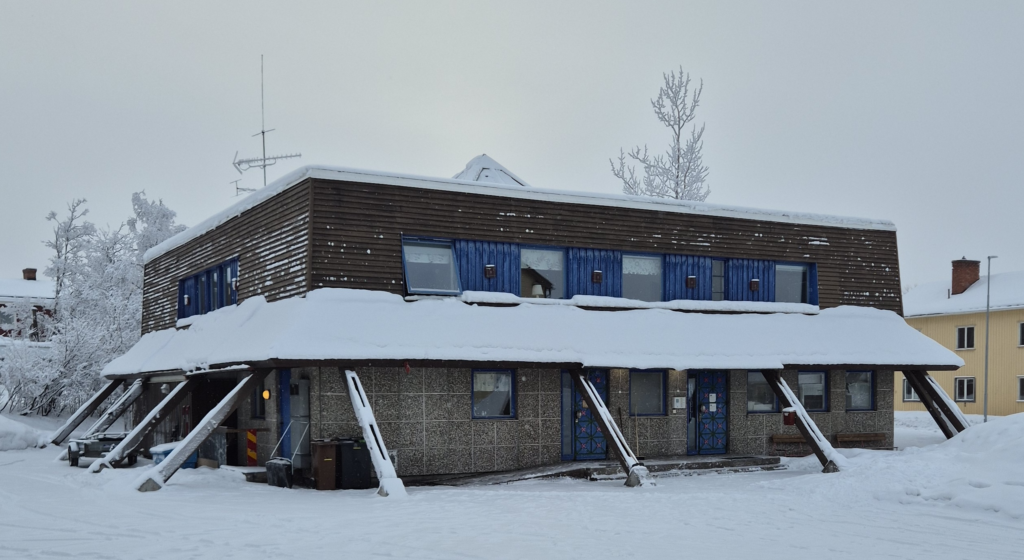
This is why Samegården was chosen for this event to respectfully acknowledge and situate us in a community space that emerge from the ongoing resistance against discrimination of Sámi people and Sápmi land in Sweden. During our first field studies in Kiruna, Gunnar Östman who is a member of Samegården explained that the building opened in 1973 after many years of work by Sámi groups who needed a place to live and meet when they come to Kiruna, at a time when hotels in the city did not accept Sámi people. Today Samegården is a community space with hotel, exhibition and assembly spaces for culture, art, organisation, conference and celebration.
During a guided tour, Gunnar used “Love and Trade” reflecting on this arctic region as connected to the world long before it was colonized by Sweden. The Sámi have been bartering food products with other cultures around the world for centuries. Products from the reindeer such as the skin, dried meet, duodji crafts, to name a few was barter-traded for sugar, coffee, wheat and salt, and many of whom are so central that special crafted carriers were designed to care for these products and still being used today. This is how Love & Trade came to be using exchange of food experiences as a lens for conversations around what stands in our way from thinking and acting out livelihoods differently in Kiruna (Giron=Ptarmigan) and regions in the Arctic beyond the representations of capitalism with its extractive activities such as the iron ore mining. We asked participants to bring food from where they come from and share stories about what they brought with each other’s. As hosts we served Bidos which is a traditional Sámi stew made from a long cooked reindeer bone broth and cooked with reindeer meet, potatoes and salt, and as vegan option we made the Indonesian dish Syur Lodeh with a touch of South America using Merkén which I had brought with me from the Araucanía region of Chile and is a traditional practice by Mapuche women to make a spice from dried and smoked chili that is grinded together with coriander seeds and sea salt. To serve the soups participants were invited to make their own Gáhkku which is a Sámi version of flat bread and for dessert gáffevuostá (coffe-cheese) made locally in a Sámi village was served. It’s a cheese made traditionally with reindeer milk but today also with cow milk with a consistence perfect for dipping in the coffee.”
⏤ Sergio Bravo Josephson
The Benevolent Food
As member of art’s collective Campoadentro-Inland and ongoing PhD focusing on community led architecture and design through practices caring for the land at Umeå Institute of design, Sergio joined Konstfesten as part of a multi-year inquiry on art, environment, and food hosted by Kin Museum in collaboration with the Food Art Research Network and under the working title The Benevolent Food. This collaborative inquiry started in September 2025 with field studies in Kiruna and will evolve over three years and involves collectives, artists, architects, designers and researchers that in different ways combine artistic practices with agriculture and food to engage with rural territories and the land in making social change. The group is made up by Åsa Sonjasdotter (Ven/Berlin), Elia Nurvista (Yogyakarta), INLAND (Madrid), Keg de Souza (Sydney/Gadigal Land), Kultivator (Dyestad Öland), Myvillages (Rotterdam/London), Olga Tsaplya Egorova (St Petersburg/Hamburg), Natalia Shapkina (Severomorsk/Greifswald), Victoria Harnesk (Porjus) and curators Madeleine Collie (Melbourne/London) and Maria Lind (Kiruna).